One theme, 800+ agency websites
Ten years with one agency, one theme behind 800+ websites
Since summer 2016, 7Fridays has built the websites of a digital marketing agency that focuses on one niche market. When we started, the agency had three people. Today it has more than 50, and we still build its sites.
At first we built one or two bigger sites a month, each a custom theme with its content written into the code. That did not suit an agency with its own marketing and SEO team: every new page or headline needed a developer. In 2018 we convinced the agency to move to a different approach: one starter theme built on ACF PRO flexible content, with about 40 components and more than 10 header and footer variants. It cost about 400 hours up front, at a time when the agency was paying for one or two sites a month.
It paid back. The agency’s designer combines the components into sites that look nothing alike, and a new site goes live in 4 to 5 hours when only the content changes, or in about 2 days with a new design and new blocks. At the peak we built 20 sites a month. We stopped counting long ago, but more than 800 websites started from this theme, and most of them score 90+ in Google’s speed test.
Today we would build the same thing with Fabrement, our own AI workplace for WordPress, on native Gutenberg blocks: the same idea of one architecture, with the site owner able to do much of the developer’s, designer’s and marketer’s work through their own AI agent. The agency sells the websites under its own name, so we do not name it here. Need this for your agency? See white label development.
- Client
- Digital marketing agency (under NDA)
- Together
- Since summer 2016
- The agency
- 3 people then, 50+ now
- What we did
- Starter theme, 800+ client websites, support
Why one theme works for 800 different sites
A starting point, not a template
We never push one change to every site. The theme is where each site starts; after launch each site grows on its own. What every site shares is the way it is built.
A starter theme that becomes custom
The core of the theme rarely changes. Each site starts from about 40 components and 10+ header and footer variants, then evolves with its client until it is a custom site of its own.
Why it matters
A new site starts in hours, and nothing ties it down later.
One architecture for every developer
Every site is built the same way, so any of our developers can open any of the 800+ sites and know where everything is.
Why it matters
When work grows, new developers are productive in days, not months.
One back end for every editor
Managers and editors at the agency work in the same admin on every site, so they learn it once and teach it quickly to every new hire.
Why it matters
An agency that grew from 3 to 50+ people never had to retrain its team per site.
Ten years in numbers
Summer 2016 to today
- 10 years
- with the same agency, and counting
- 3 → 50+
- people at the agency while we built its sites
- 800+
- websites started from one theme
- 4h–2 days
- from design to a live site
- 90+
- Google speed score on most builds
The hard part: 400 hours before the first site
What it took to get here
The hardest part was not the code. It was convincing the agency to change technology. The theme took about 400 hours to build before a single client site used it, and in 2018 the agency was paying for one or two sites a month. Hand-built themes worked; switching meant paying for something that would only pay back later.
It paid back faster than either of us expected. Sites that took weeks went live in days, the agency’s own team could edit them, and the volume grew to as many as 20 new sites a month.
The second test came when we started rebuilding a large batch of old websites that another company had built. The work outgrew the team, so we put three to six developers on the project, taught each of them the theme, and kept adding new features to it at the same time. Because every site follows one architecture, a new developer was useful within days, and the theme kept improving while the rebuilds went out.
Today we would build a theme like this another way, with AI. We build a predefined set of native Gutenberg blocks; each site owner sets up their own design system (colours, fonts and buttons), combines their own website from the blocks, and changes any block to fit through their own AI agent. A shared library lets blocks be shared or sold to everyone who runs the same theme. The engine for this already exists: Fabrement, the plugin we built and use on every new site.
Ten years, one agency
2016 to today
-
Summer 2016: hand-built themes
A three-person agency, one or two bigger sites a month, each a custom theme with its content in the code.
-
2018: the starter theme
About 400 hours on one theme built with ACF PRO flexible content: 40 components, 10+ headers and footers, editable by the agency’s own team.
-
Growth and rebuilds
Up to 20 new sites a month, then a large batch of old sites from another company rebuilt by a team of three to six developers.
-
Today: 800+ sites
The agency has 50+ people and we still build its sites. Our new builds use Fabrement and native Gutenberg blocks.
Custom WordPress theme development for agencies
Questions, answered from ten years on this project
Do you update all 800 sites when the theme changes?
No. The theme is a starting point, and its core rarely changes. Each site starts from it and then evolves with its client until it is a custom site of its own. What all the sites share is one architecture, which is what makes them easy to work on.
How fast can a new site go live on a starter theme?
On this theme, 4 to 5 hours when a new site only needs its own content, and about 2 days when it has a new design with differences or new blocks.
How long does it take to build a starter theme like this?
This one took about 400 hours in 2018, before the first client site used it. It paid that back by turning weeks of work per site into hours or days, for more than 800 sites.
Won't every site on a shared theme look the same?
Not if the theme is built for it. There are about 40 components with visual variants and more than 10 header and footer variants, so the agency's designer combines them into sites that look nothing alike.
Can new developers work on the sites quickly?
Yes. Every site follows the same architecture, so a developer who knows one knows them all. When the work outgrew the team, we put three to six developers on the project and taught each of them the theme while we kept adding features.
Is it easier for the agency's own team?
Yes. Managers and editors use the same back end on every site, so they learn it once and teach it quickly to new hires. The agency grew from 3 to more than 50 people on it.
Do the sites stay fast?
Speed was part of the theme from the first version, not a fix added later. Most sites built on it score 90+ in Google's speed test.
Can you work under our agency's name?
Yes. This agency sells the websites under its own name, and we do not name it here. Our white label development page explains how we work with agencies.
How would you build this today?
With Fabrement, our own AI workplace for WordPress, on native Gutenberg blocks. The idea is the same: one architecture for every site. The difference is that the site owner can now do much of the developer's, designer's and marketer's work through their own AI agent, inside the rules we set.
More WordPress projects
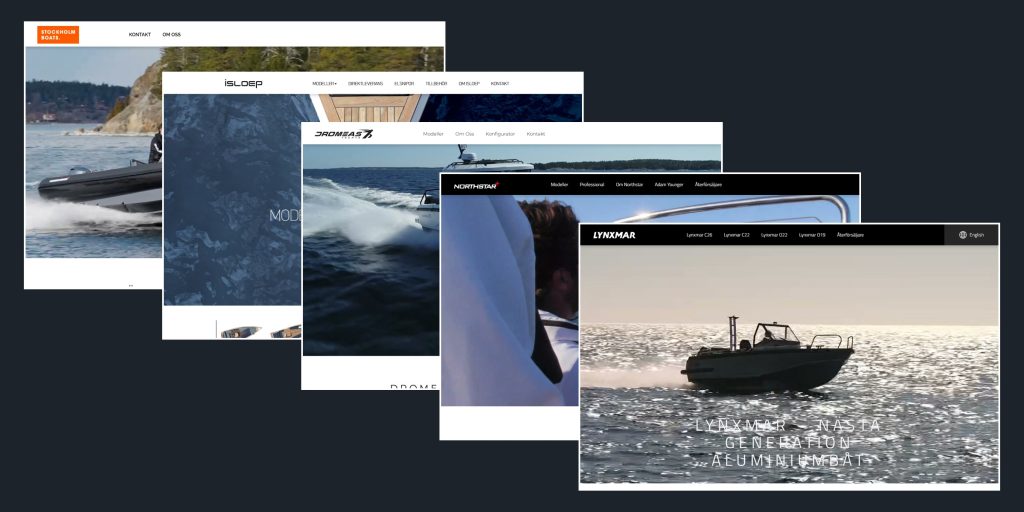
Stockholm Boats
One custom WordPress theme behind five boat websites for a Swedish boat dealer: Stockholm Boats, iSloep, Dromeas Yachts, Northstar Boats and Lynxmar.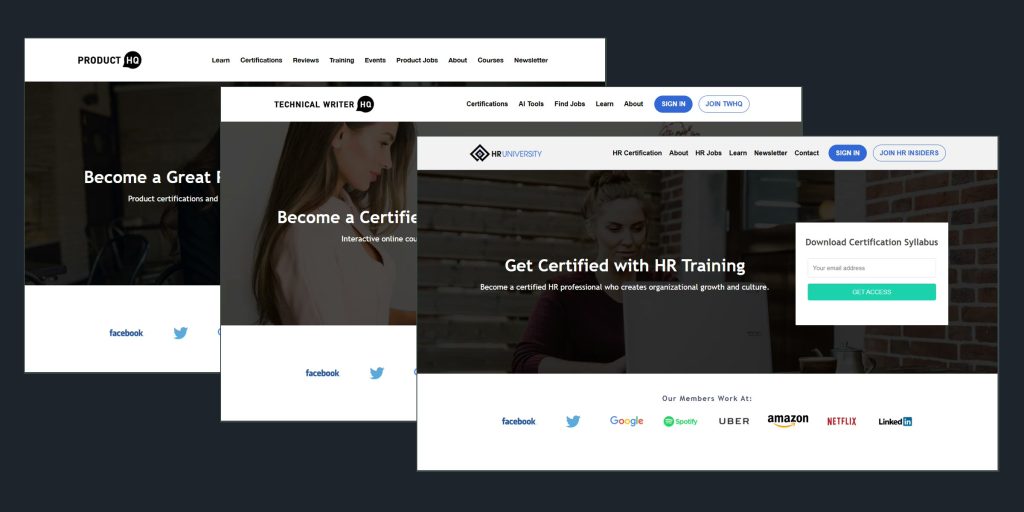
HR University, Technical Writer HQ and Product HQ
Theme development for three career-education websites, built with performance in mind: close to 1,000 articles, 25+ certification courses, Stripe payments, and 99% of URLs passing Core Web Vitals on mobile.
Fast websites for the blazing World
Website speed, WordPress as the most popular CMS and how make it super fast using WordPress Headless solution.
Let's make something meaningful
Tell us what you are building. A real engineer replies within one working day — usually with questions, sometimes with a first estimate.
Talk to us
Tell us what you are building. A real engineer replies within one working day — usually with questions, sometimes with a first estimate.