HR University, Technical Writer HQ and Product HQ
Content websites built for organic traffic
Website speed optimization for three career-education websites: 7Fridays rebuilt and supports HR University, Technical Writer HQ and Product HQ. Together they hold close to 1,000 articles, 25+ certification courses and two job boards, and in Google Search Console none of their 749 tracked URLs is rated poor for Core Web Vitals: all of them pass on desktop, and 743 on mobile.
We started in 2020 with a single task: a landing page on a pre-built theme. Someone had already edited the theme’s code by hand to make it faster. Pages loaded well, but the code was a mess: each page template had its own structure and carried its own scripts. We built the landing page and connected it to the Google Sheets API, so the information collected on the site went straight into a spreadsheet. But every change took longer and cost more than it should.
Once trust was there, we rebuilt the themes in 2022 on reusable blocks made with ACF flexible content: about 220 hours for the new theme, including moving the first site’s content and SEO, then about 60 hours for each of the other two sites, our standard way to build WordPress at the time. Since then the sites have stayed fast as they grew, measured by Core Web Vitals. We changed the blog post layout several times, built the events section, kept the job board plugin that was already on the sites running, added a payments module for the courses through the Stripe API in 2024, and still support the sites as needed. They live on organic search traffic, which is why speed and a clean structure matter here more than anywhere.
Websites: hr.university, technicalwriterhq.com, producthq.org
- Industry
- Online career education
- Year
- 2020 to today
- What we did
- Landing page, theme rebuild, events, Stripe payments, support
- Built with
- WordPress, ACF PRO, Google Sheets API, Stripe API

Why manual speed fixes stopped working
Before the rebuild
The sites were fast on the surface. Underneath, speed came from hand-made fixes that every new page and every change had to work around.
Speed fixed by hand
Someone had modified the pre-built theme’s code directly to raise performance. The result looked like our own work from the outside.
Why it matters
A fast site built on manual patches stays fast only until the next change.
Scripts on every template
Each page template had its own structure, so each carried its own scripts. One fix covered one template, never the whole site.
Why it matters
Every change had to be made and tested several times.
Landing page with Google Sheets
Our first task: a landing page on that theme, connected to the Google Sheets API so the information collected on the site went straight into a spreadsheet.
Why it matters
It worked, but it showed how much the old code cost to maintain.
The sites in numbers
Google Search Console and sitemaps, November 2026
- ~990
- articles across the three sites
- 25+
- certification courses
- 99%
- of URLs good on mobile, 100% on desktop
- 5 years
- of stable top-level performance
Proof from Google Search Console
Core Web Vitals on mobile, August to November 2026
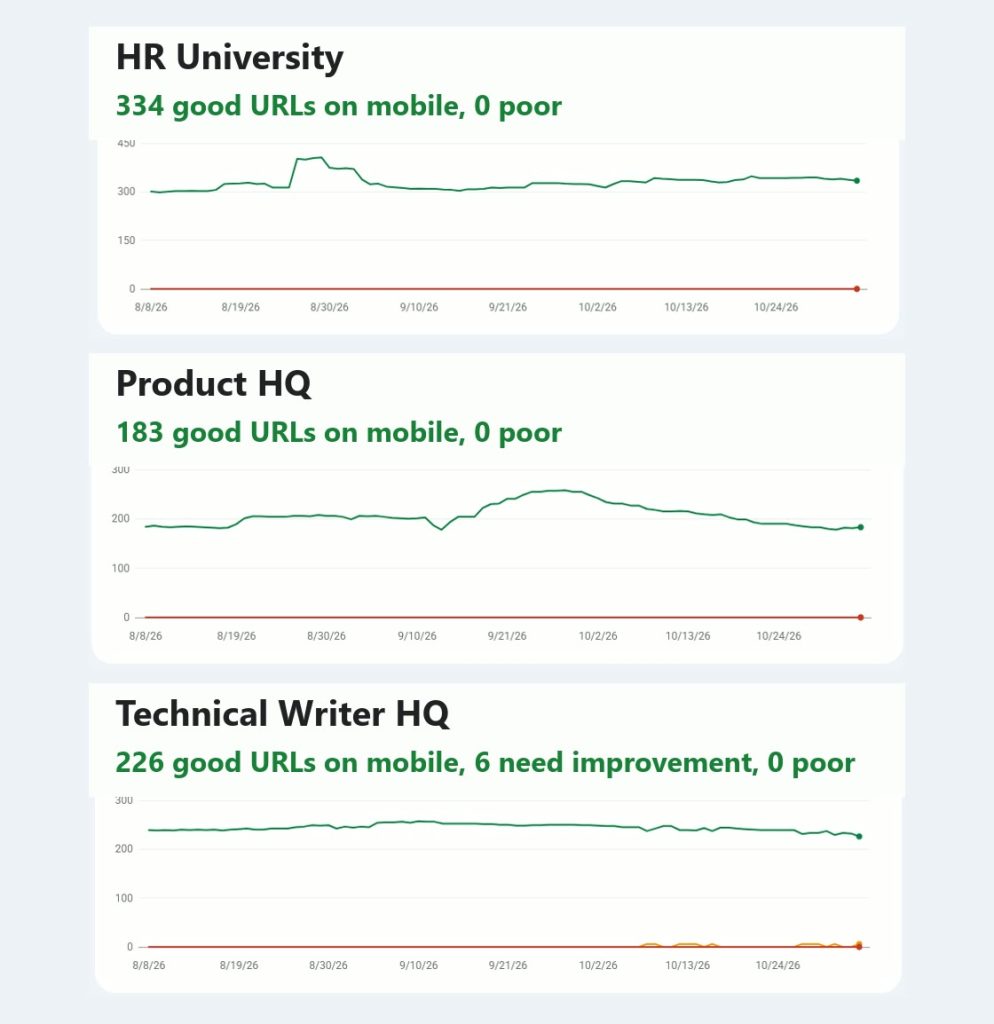
These are the Core Web Vitals reports from Google Search Console for the three sites, on mobile. Google rates every URL by real visits from Chrome users on three measures: LCP, how fast the main content appears; INP, how fast the page reacts to a tap or click; and CLS, how much the layout jumps while it loads. Each URL is good, needs improvement or poor.
None of the 749 URLs is rated poor. On mobile, 743 are good; the 6 on Technical Writer HQ that need improvement are the only ones not in the green. On desktop, every URL is good.
Fast on every template
One set of reusable blocks, each optimised once, serves every page. No more scripts tied to a single template, so speed holds as the sites grow.
What a content site needs to keep ranking
After the rebuild
Blog layouts that can change
We changed the blog post layout several times. On reusable blocks a new layout reaches every article at once, without breaking speed or the pages search engines already know.
Courses paid with Stripe
A payments module built on the Stripe API, so readers who arrive from search can buy a certification course on the same site.
High quality work, responsive, and exceptional code.
From one landing page to three rebuilt sites
2020 to today
-
2020: the landing page
Built on a hand-modified pre-built theme, with data sent to Google Sheets through the Google API.
-
2022: the rebuild
A new theme on reusable blocks made with ACF flexible content: about 220 hours, content and SEO of the first site included, then about 60 hours for each of the other two sites.
-
Since then: fast
No URL rated poor for Core Web Vitals in Search Console. Blog layouts changed several times, and an events section added, without losing speed.
-
2024: course payments
A Stripe API payments module for the courses. We still support the sites, job board plugin included, as needed.
Website speed optimization
Questions, answered from this project
Why do manual speed fixes stop working?
Because they are tied to the code they were made in. On these sites each page template had its own structure and its own scripts, so every fix covered one template, and every new page or change had to work around the old patches.
How long does website speed optimization take?
On these sites it meant rebuilding the theme. In 2022 the new theme took about 220 hours, including moving the first site's content and SEO, and each of the other two sites then took about 60 hours on it. How much AI speeds work up depends on the kind of work, and theme building and content transfer gain the most: with today's AI models in our workflow, we would do this project about ten times faster.
Is it cheaper to rebuild than to keep fixing?
On these sites, yes. The old theme cost more with every change, because each template carried its own scripts and every fix had to be made several times. After the rebuild we changed the blog layout several times without any new speed work.
Can you fix Core Web Vitals without rebuilding the site?
Sometimes, for a while. We worked on the old theme from 2020, but the lasting fix was rebuilding it in 2022 on reusable blocks: each block is optimised once and serves every page. Today none of the three sites' 749 tracked URLs is rated poor in Google Search Console; all pass on desktop and 743 on mobile.
What are Core Web Vitals?
Google's three measures of how a page feels to real visitors: LCP, how fast the main content appears; INP, how fast the page reacts to a tap or click; and CLS, how much the layout jumps while it loads. Google rates every URL by real Chrome visits as good, needs improvement or poor.
Can we change the blog layout without hurting speed or SEO?
Yes. We changed the blog post layout on these sites several times. With reusable blocks the new layout reaches every article at once, and the addresses and structure search engines know stay the same.
Can a content website sell courses?
Yes. We added a payments module built on the Stripe API, so readers who find an article through search can buy a certification course on the same site.
What do you build reusable blocks with today?
In 2022 we built them with ACF flexible content, our standard at the time. Today our standard is native Gutenberg blocks.
More WordPress projects
LG Sonic
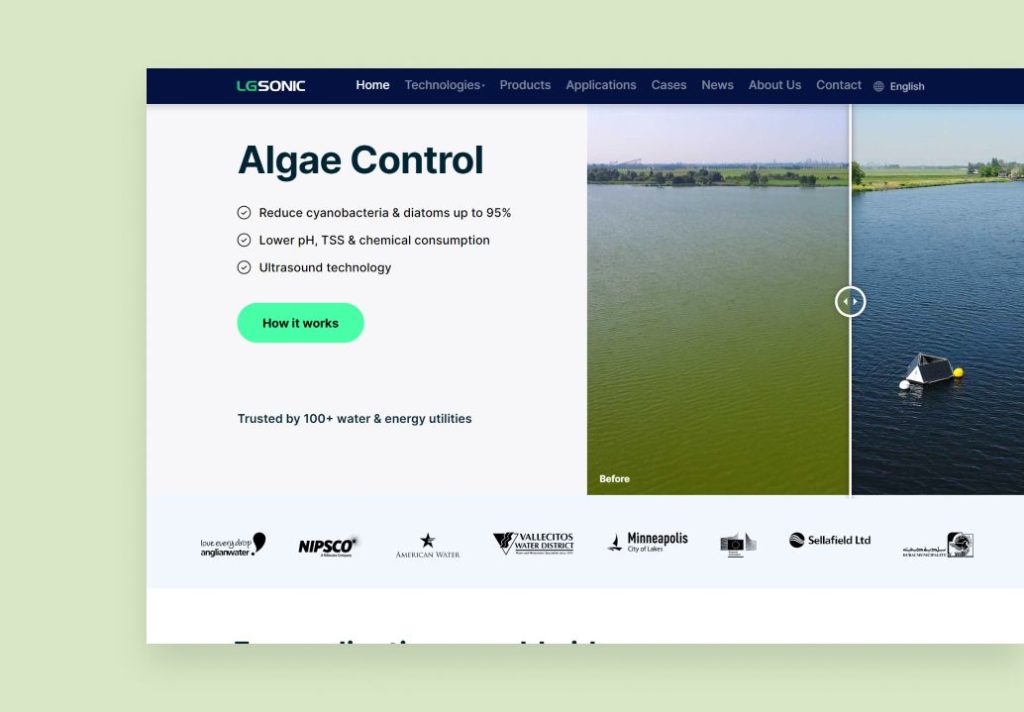
A multilingual website for LG Sonic, a leader in chemical-free algae control: 7 languages, about 1,100 pages in each, built to turn industry research into assessment requests.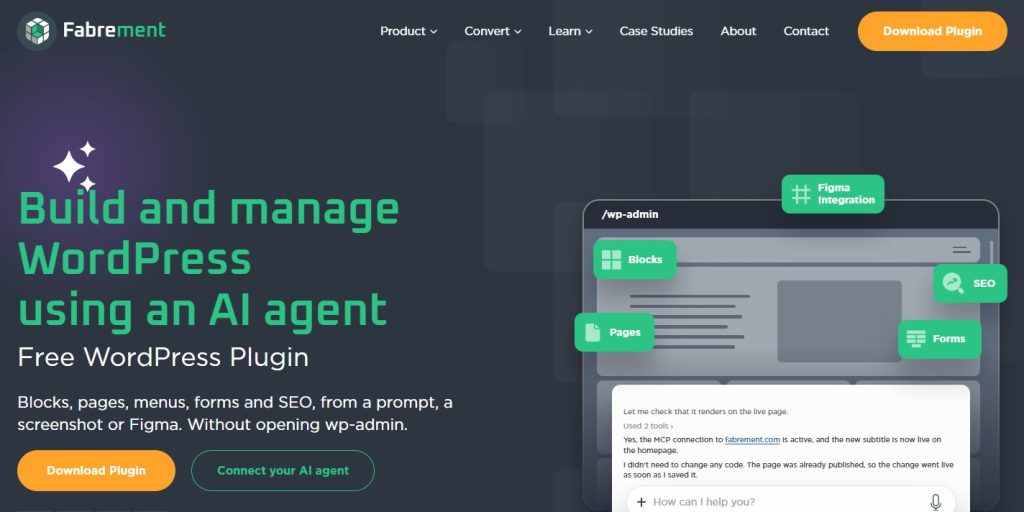
Fabrement
WordPress plugin development for our own team: Fabrement, a plugin with an MCP server for every site, so the AI agent you already use builds WordPress properly. This site went from Figma to live in 6 hours.
Google Speed Metrics and Core Web Vitals
More about google speed metrics, core web vitals, google speed test and real users experience. How users peaks can influence on metrics.
Let's make something meaningful
Tell us what you are building. A real engineer replies within one working day — usually with questions, sometimes with a first estimate.
Talk to us
Tell us what you are building. A real engineer replies within one working day — usually with questions, sometimes with a first estimate.