Streamline Bath
Custom ecommerce development on one database
7Fridays builds and runs the websites of Streamline Bath, a North American maker of bathtubs and related products for bathrooms and kitchens: shower doors, vanity tops, basins, range hoods and sinks. Four regional sites, streamlinebath.com, .de, .ca and .eu, run from one product database.
We started in 2019 by building a catalogue website on WordPress from Figma designs. Selling on the site was not part of the plan: product pages sent buyers on to the brand’s shops on Amazon and eBay. The idea from day one was one database: every product is managed once and pulled into every site, so a change reaches all of them at once.
When the client decided to sell directly through the websites, the catalogue’s back end was already very custom. A ready-made shop would have meant changing what already worked, so we wrote the ecommerce part ourselves, on the same WordPress database: only what the shop needs, and nothing that slows the pages down. We have supported the shop for about five years since.
Websites: streamlinebath.com, streamlinebath.de, streamlinebath.ca
- Industry
- Bathtubs, bathroom and kitchen products
- Year
- 2019 to today
- What we did
- One product database, four regional sites, custom ecommerce, support
- Built with
- WordPress, custom ecommerce, Stripe API, webhooks, Amazon cloud storage
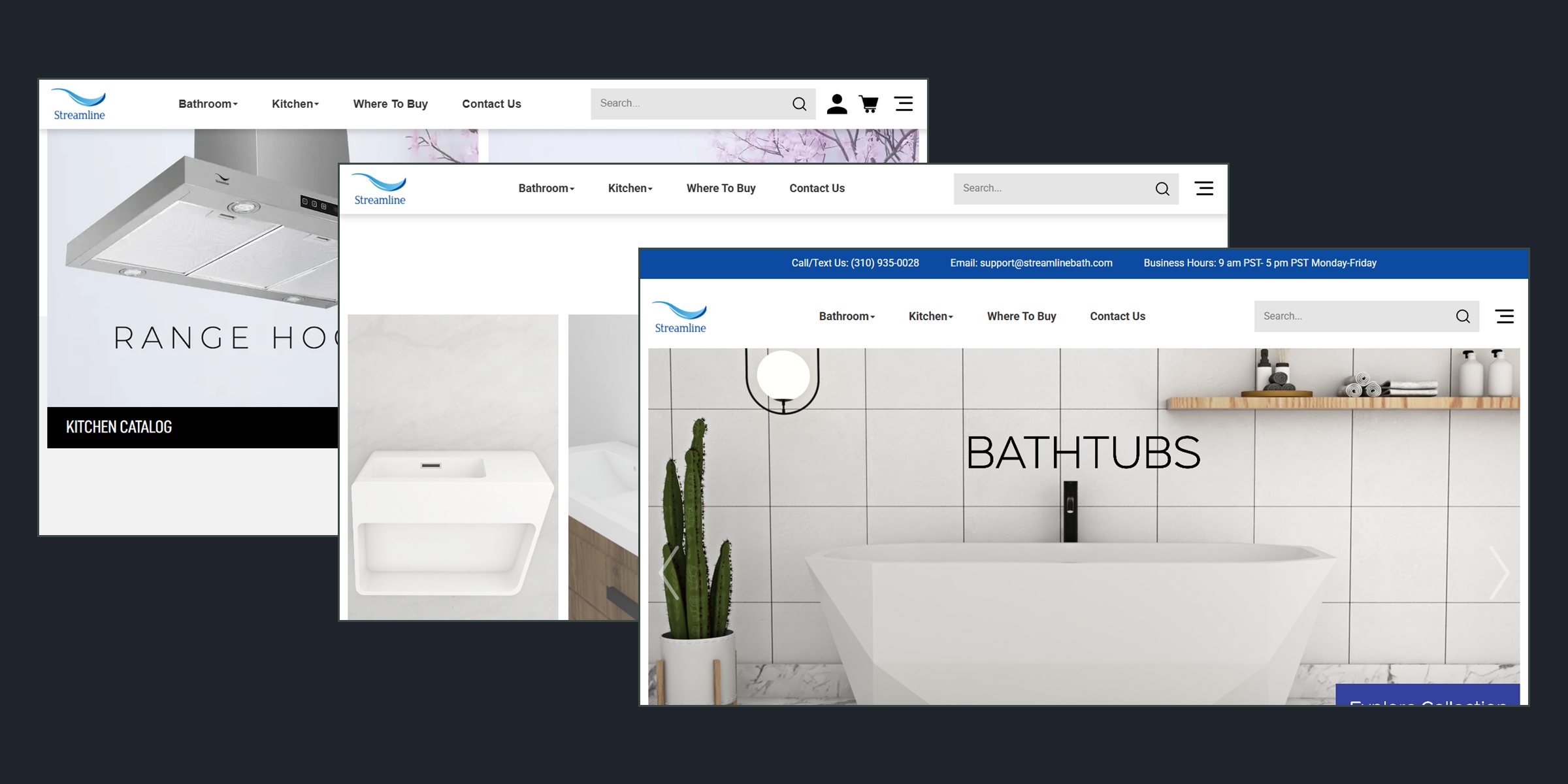
What the custom shop handles
Built around a catalogue that already worked
The shop reads every product straight from the WordPress database the catalogue already used. Nothing is copied into a second system, so the four sites and the shop always show the same products.
Payments with a stock check
Customers pay a deposit through Stripe and the order is saved. Every three hours a scheduled check confirms full payment, so an order only goes through for products that are really in stock.
Why it matters
Bathtubs are big and costly: selling one that is not in the warehouse is an expensive mistake.
Stock and prices by webhook
At first the owner uploaded a file with stock and prices every day by hand. We replaced it with automatic updates through webhooks.
Why it matters
No daily upload, and no prices left out of date when someone forgets.
Images shared by four sites
About 120,000 product images moved off the WordPress server to Amazon cloud storage, and all four regional sites now use the same copies.
Why it matters
Less load on the server, a much smaller hosting bill, and no uploading the same picture four times.
The shop today
Since 2019
- 4
- regional sites, one database
- 120,000
- images off the web server
- 7 years
- regular support
- < 24 h
- ticket response
Built in layers, not in one go
Why this shop is custom, and what makes it hard
We looked at ready-made ecommerce first. But the catalogue’s back end was already very custom, and a standard shop would have meant rebuilding parts that worked fine. Writing the ecommerce ourselves let us keep everything the site already did and join it all into one system.
The hard part is that this was never a project written once, and selling online was not even in the first plan. Every year brought new features: the shop itself, payment checks, automatic stock and prices, shared images. Each one had to live with the logic already there, often logic written for a different purpose, without breaking the four sites that sell every day.
Some things stay deliberately simple. Shipping is not integrated: the way this business ships bathtubs does not fit a standard shipping service, so the client’s team handles delivery for every order that comes in through the websites.
Proof from Google's real-user data
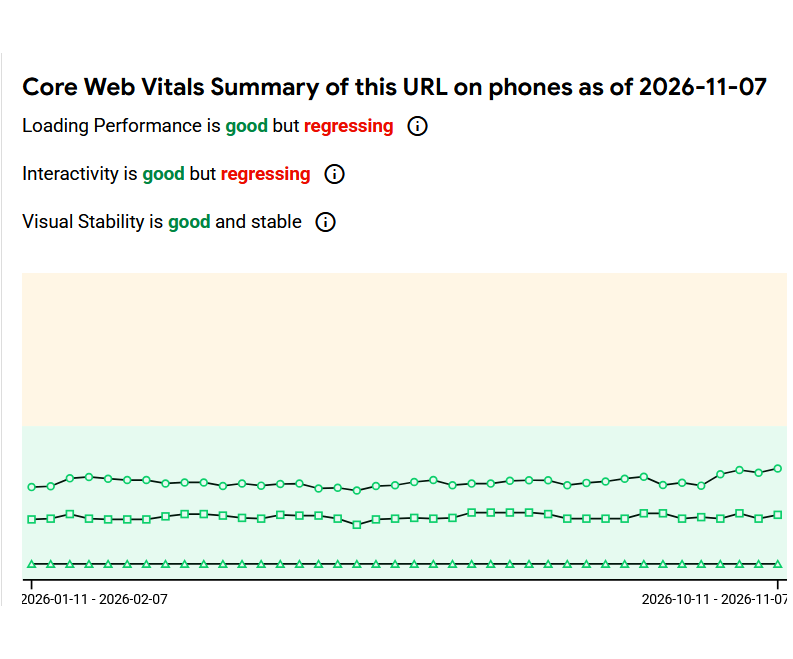
Core Web Vitals on phones, January to November 2026
This is Google's Chrome UX Report for streamlinebath.com on phones: data from real visitors, not a lab test. It rates the three Core Web Vitals: how fast the main content appears (loading), how fast the page reacts to a tap (interactivity), and how much the layout jumps while it loads (visual stability).
All three have stayed in the good range every month this year, on a custom shop with about 120,000 product images. That is what writing only the ecommerce the shop needs buys you: nothing extra for the page to load.
Exceptional professionalism and efficiency … consistently delivered high-quality results in a timely manner. Dedication and attention to detail greatly contributed to the success of our project.
How the store grew
From a catalogue to four selling sites
-
A catalogue from Figma designs
In 2019 we built the catalogue on WordPress from Figma designs: four regional sites, one shared product database, and buyers sent on to Amazon and eBay.
-
Custom ecommerce on top
Direct sales added later on the same database, with Stripe payments and a check that the product is in stock.
-
Stock and prices automated
The owner’s daily file upload replaced by webhooks that update stock and prices on their own.
-
Images moved and shared
About 120,000 images moved to Amazon cloud storage and shared by all four sites.
Custom ecommerce development: questions from this project
Answered from five years on one shop
When is custom ecommerce development better than WooCommerce?
When the site is already very custom and a ready-made shop would mean rebuilding what works. Here the catalogue's back end was already custom, so we built the shop on the same WordPress database instead of bolting a second system onto it.
Is a custom shop fast?
This one is. Google's data from real visitors' phones (Chrome UX Report) shows all three Core Web Vitals, loading, interactivity and visual stability, in the good range for streamlinebath.com every month from January to November 2026.
Can several country sites sell from one product database?
Yes. Streamline Bath runs four regional sites (.com, .de, .ca and .eu) from one product database, so each product is managed once and every site shows the change.
How are stock and prices kept up to date?
Through webhooks that update them automatically. At first the owner uploaded a file every day by hand; we replaced that so prices and stock no longer depend on someone remembering.
How do payments work in a custom shop?
Here through Stripe's API. The customer pays a deposit, the order is saved, and every three hours a scheduled check confirms full payment, so an order only goes through for products in stock.
Can you cut hosting costs on a shop with many images?
Often, yes. We moved about 120,000 product images off the WordPress server to Amazon cloud storage, which took load off the server and cut an expensive hosting bill, and all four sites now share the same image copies.
What does ongoing support look like?
On this shop, 5 to 10 hours a week: the owner's requests plus WordPress and plugin updates. We answer tickets within 24 hours, and critical ones often right away.
Do you integrate shipping?
When it fits the business. Here it did not: the client's own team handles delivery for every order that comes in through the websites.
More ecommerce work
Scheffler Home
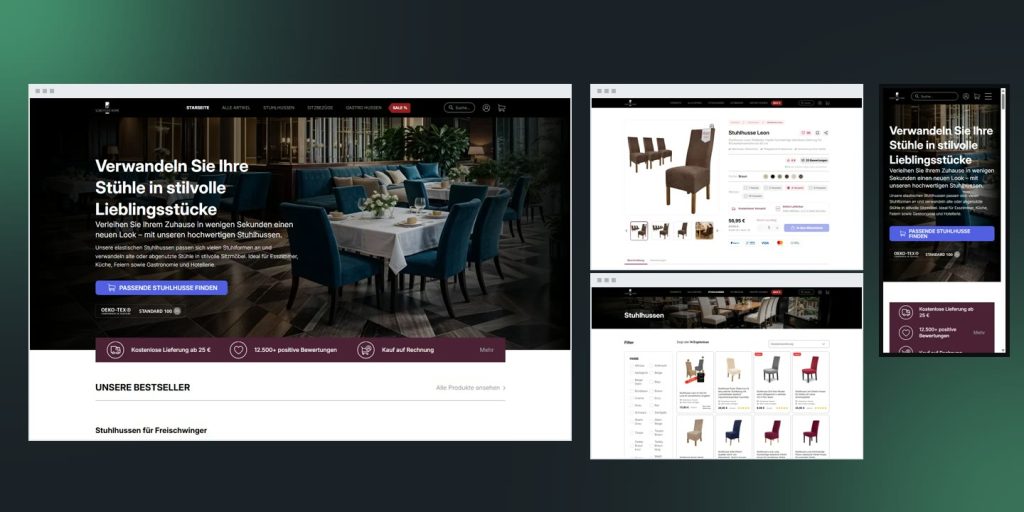
A custom WooCommerce theme for SCHEFFLER-HOME, a German chair cover shop: a conversion-optimized mockup built in 120 hours, the store moved over, and Google's mobile performance score up from 44 to 86.
WooCommerce ERP integration
A WooCommerce plugin that connects a UK ERP to online shops: real-time stock, orders reserved and prepared for shipping in the ERP, and no lost orders when the ERP is down. Four large shops built on it, three years of support.
Google Speed Metrics and Core Web Vitals
More about google speed metrics, core web vitals, google speed test and real users experience. How users peaks can influence on metrics.
Let's make something meaningful
Tell us what you are building. A real engineer replies within one working day — usually with questions, sometimes with a first estimate.
Talk to us
Tell us what you are building. A real engineer replies within one working day — usually with questions, sometimes with a first estimate.