


AI and New Red Flags
Catalyst for efficiency in the Modern Digital World
Every professional today relies on AI across almost every field of human activity and industry. It streamlines work, making tasks much more efficient. This is especially true in the digital world, where tools like Cursor and Copilot accelerate coding processes and frequently help bridge knowledge gaps that developers may have.
The Illusion of Expertise
At the same time, AI exposes gaps in expertise that people might lack. Sometimes, people rely too heavily on “ChatGPT” judgments without realizing that it is not a true expert but merely a tool that only experts can use effectively. It does not allow you to jump from beginner or novice to senior-level proficiency, as you lack an understanding of all the necessary connections. Furthermore, AI is highly user-oriented—if it notices that you hold a particular vision, it will select only the facts that support it. This does not even account for hallucinations or outright incorrect answers that you might miss due to a lack of expertise.
AI evaluates AI
Another challenge arises when hiring for new team roles. Even before AI, hiring for positions where your team lacks expertise was sometimes very difficult. For example, if you’re hiring a developer but don’t know how to code or have little experience in building real products, you might rely on AI to generate interview questions, assess AI-generated responses, and then evaluate them using the same AI model. This can lead to AI evaluating AI, making it harder to judge a candidate’s actual skills.
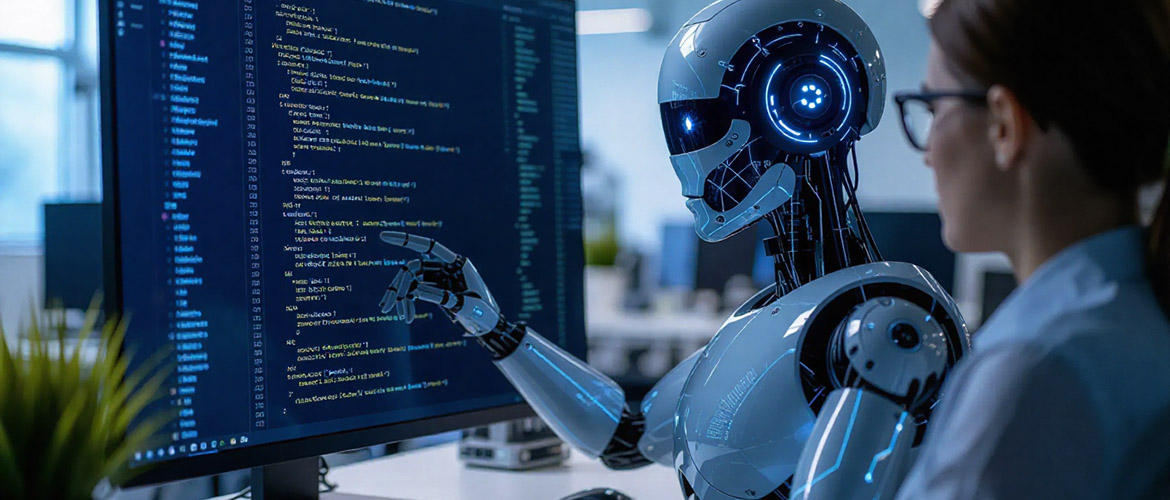
Out of comfort zone
When this pattern becomes systemic, you may eventually realize that you are surrounded by a shallow imitation of expertise. There are few discussions—everything is decided through AI consultations. These are your red flags, and if you recognize them in time, they may save you. But sometimes you don’t—because this environment feels comfortable. All the answers seem clear, the same perspective is reinforced everywhere, and generally, everything appears to be going well. However, when you review the final outcome, you may find that it does not allow you to compete with professional teams.
Loss of critical thinking skills
Constant interaction with AI gradually changes the human approach to information analysis. Many specialists begin to accept the model’s answers as gospel truth, without verifying sources or comparing the data with real-world experience. Over time, this reduces the ability to independently analyze complex situations and find innovative solutions.
This is especially noticeable in areas that require a deep understanding of processes and high levels of responsibility for results. Developers, analysts, and managers are increasingly accustomed to receiving quick answers instead of delving into the root causes of problems. As a result, work speed may increase, but the quality of professional thinking gradually deteriorates.
The main consequences of over-reliance on AI include:
- Decreased ability to make independent decisions;
- Loss of skills for deep analysis of information;
- Superficial understanding of complex processes;
- Reducing the number of professional discussions in teams;
- Increased confidence in erroneous conclusions due to automatic confirmation of user opinion.
However, the problem isn’t always immediately apparent. Initially, using AI does create a sense of efficiency and productivity, as many tasks are completed more quickly. However, over time, it becomes apparent that without constant practice, specialists lose the ability to handle non-standard situations without external guidance.
That’s why it’s important to view AI as a complementary tool, not a replacement for professional expertise. Technology can speed up work processes, but only humans can assess the context, identify hidden risks, and make truly informed decisions.
Balancing automation and expertise
Despite all the risks, artificial intelligence remains a powerful tool for business development and accelerated work processes. Companies that successfully integrate AI into their processes gain a significant competitive advantage. They reduce task completion times, test ideas faster, and allocate resources within teams more effectively.
However, AI only delivers its full benefit when used by specialists with deep knowledge of their field. An experienced professional can distinguish useful recommendations from erroneous ones, tailor the results to the specific task, and recognize the model’s limitations. Without this, even the most advanced technologies can lead to the accumulation of errors and a decline in the quality of work.
Furthermore, it’s important to maintain a culture of discussion and professional knowledge sharing within the team. If employees stop analyzing decisions and simply accept AI responses as ready-made instructions, the company gradually loses its ability to develop independently. In the long term, this could become a serious problem for any business operating in a competitive digital environment.
Responsible use of technology
For AI to truly enhance professional skills, it’s essential to develop a conscious approach to its use. It’s important not only to receive quick answers but also to understand the logic behind the decisions the model makes. This approach helps maintain a balance between automation and developing one’s own competencies.
In practice, responsible use of AI includes several key principles:
- Regular verification of information from various sources;
- Analysis of the model’s recommendations before their application;
- Developing your own professional skills independent of AI;
- Discussing solutions within the team, not just with the algorithm;
- Using AI to speed up work, not to completely replace expertise.
Only with this approach can artificial intelligence become a true tool for enhancing efficiency, rather than a cause for the gradual degradation of professional thinking. Technology continues to develop rapidly, so the main competitive advantage remains not access to AI itself, but the ability of people to use it correctly and consciously.
We are on the brink of the next technological revolution, similar to the Scientific Revolution in the middle of the 20th century, and the importance of choosing the right technical partner has never been greater. At 7Fridays, we have assembled a team of true experts who have worked together for the last 10 years. During this time, we have gained extensive experience in web development, allowing us to quickly allocate the right person with the necessary expertise. I’m proud to be part of such a team.


AI is Changing the World
WordPress as a platform for Software

